Posts

Mindfulness, Meditation, & Medicine
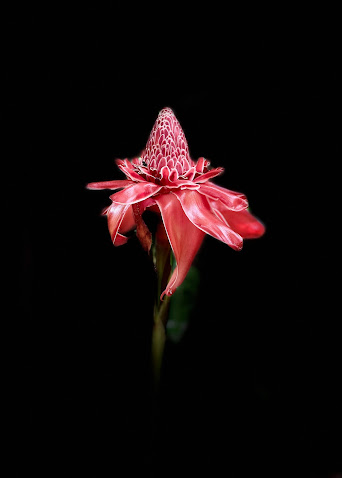
Image
       I want you to look at this photo ( Etlingera elatior, which I took at the botanical gardens in Rio de Janeiro), take a deep breath, maybe a cold shower, meditate a bit, do some yoga, sing a song, laugh, whatever it takes to pump up that vagal tone! Last week I was invited to give a lecture on Mindfulness, Meditation, & Medicine to the Lifestyle Medicine group at UCF. The lecture was attended by first and, mostly, second year medical students. We went over, the what, why, and how of meditation and mindfulness. Sadly, the practice of medicine in the modern era is rarely about wellness, but rather interventional disease management. Most healthcare providers aren't "well" themselves, much less their patients, and are caught in vicious, stress inducing circles both from personal choice and from circumstances out of their control. go to sleep). One of the topics that I like to bring up is the importance of vagal (nerve) tone...

What is a tree, or disease, by any other name?

Image
My last fellow, in retinal diseases, came up to me one day and asked me about a diagnosis. She was so excited. It was her second day on the service, and the first day with me staffing her in clinic. She couldn't wait to present me with a detailed, and clear description of the pathology at hand, "there is this punched out lesion involving the outer segments of the retina and choriocapillaris, with pigmented edges, free of infiltrates.I just don't know what it is?" Well, what would you do? Would you give her the answer?  "Look, I am going to tell you what it is, but before I do, I want you to be present with this moment, and really enjoy it for what it is." It's that moment, of wonder, before you've labelled something, that you really see it for what it is. Once you give it a name, which is helpful for talking about it, and in medicine billing for seeing it, you never see it the same way again. You just glance over it. ...

Bruce Lee, Wu Wei, & The Art of Surgery

Image
The greatest carver does the least cutting. lao tzu   C an bruce lee teach you anything about surgery? That, like anything else, depends on the person being taught. Enter the Dragon, his last movie , opens with Lee having just pinned and tapped out his opponent. The scene changes. We find Lee in a monastery, on a lovely hill,   branches swaying in the wind, birds singing in the background, all very zen, when Lee begins to wax philosophical   Enter the Dragon was a cultural phenomenon. Released a few months after Lee’s untimely death, theaters were sold out everywhere. For many Westerners, it was their first introduction to Asian culture and philosophy, and for everyone it was the start of the martial arts phenomenon. Dojos opened every­where. Kung fu movies became the routine at cinemas, and Lee became a household legend. But more than anything else, the movie was a vehicle for Lee’s philosophy on life and the martial arts. Lee ...

Nature, Elk, and Popliteal Artery Aneurysms.

Image
  I took this photo last year in Yellowstone national park in Wyoming as a family of Elk came by to have lunch. I sat still, mostly as I did quietly took the picture. I had been for hours. I wasn't checking my cell phone, just sitting and observing everything.  We forget that we, too, are nature. I had a fellow once who was full of energy, had lots of questions, and whose mind ran a lot faster than mine. My fellows get interesting assignments; some, who told me they never looked up at the stars, accompany me to a planetarium and a night sky watch, others I've had do a "Big Year" which is keeping a list of all the birds they see or hear over the course of their fellowship. They aren't allowed to graduate unless they turn in both a procedure log and a big year list. As an aside, Steve Martin and Jack Black made a really funny movie about their Big Year a while back.  When you sit still long enough, without checking your phone, or a boo...

The Zen of Recycling. Biodegradeable Plates in Kathmandu.

Image
     I was walking through Kathmandu a few years back when I came across the plates at a local street corner stand. What struck me was how beautifully simple, and elegant the whole concept was. All made from plant materials and all biodegradeable. Here, we have “trash.” Yes, there’s recycling but it’s still built on the concept of trash, not conscious consumption. Indigenous peoples had a different understanding of their place on this planet and their relationship to nature, before our culture destroyed theirs. Unlike the modern western mythology that has us lord over nature, where plants, trees and animals are subjugated to our use, while we destroy this planet and soon others through non conscious consumption, they didn’t have a concept of trash. Every part of any animal and nature was used and reused and everything was biodegradeable. Even shit was properly biodegraded. S.O.S. We are the only animal species on this planet that saves ou...

Handwriting, Cursive, and the Flow of Life.

View this post on Instagram A post shared by Saad Shaikh (@eyeislife) … the instrument plays itself. -  J.S. Bach      Writing, done, well is a way to be present. My experience with handwriting began in 2nd grade where, in a school in Los Angeles, I first introduced to cursive. We had to hold our pen properly, two fingers, not three, gracefully, and lightly, with the pencil just floating in your hand, and not squeezing the life out of the pencil, paper at the right slant and then practice, practice, practice. If you have callouses on your fingers from holding your writing instrument you are holding it wrong!     I  grew up with script and by the time I was in college at UCLA all my notes were in cursive, and then that carried on to medical school, and then private practice. In clinic, I began using a fountain pen, at first the disposable plastic ones with ink cartridges and then when the lids k...

The Cup is Full. Surgery, Koans, and Self-Awareness.

Excerpt from  The Wisdom of the Knife. Zen in the Art of Surgery The more you know, the less you understand -  lao tzu      ...  Surgeons always start their careers with someone else’s style. That’s understandable. You have to start somewhere. It’s moronic to reinvent the wheel, and you don’t want to make unnecessary mistakes. If you watch enough surgery you’ll recognize certain styles and schools of training like you see in the martial arts. There’s tradition, pride, and a whole lot of ego involved. Some surgeons take the style they’ve trained with and add to it, improving on it, finding new efficiencies, incorporat­ing advances in instrumentation and tech­nology. Others depend only on what they once learned. That’s who you don’t want to be. The surgeon incapable of exceeding his style grows old, literally. He is incap­able of seeing a fundamental truism in surgery – that the law of imper­manence pervades everything, sur...

Zen Koans, Singing Bowls & the Art of (Teaching) Medicine.

Image
Lunch teaching conferences began with the resonant sounds of this Buddhist singing bowl I bought some years back in Kathmandu.* On the whiteboard across the room, on any given day you might find a zen koan, a kikuyu proverb, or something in Japanese (the Japanese and Germans have a word for everything but my favorite was tsundoku - Japanese for all the books you've bought and haven't read, and I have several). For anyone conditioned by their training in modern medicine, it was so very different. The purpose of all of this was to draw the audience in to the present moment, away from a busy day in clinic or operating room, where reality is just the sound of the bowl ringing, and not the abstraction of life, and medicine, in the symbols and thoughts resonating in our heads, past and future. And yet, it couldn't but remind me of the temple bells from Nanzen-ji temple I would hear while strolling along the Philosopher's Path in Kyoto years ag...